
Recovering from an Ankle Sprain: What We’ve Learned on the Court
It happens in a heartbeat. Your guard drives the lane in a Tuesday night Canadian university game, plants hard on a crossover, and her ankle rolls inward. She’s on the floor before the whistle even blows. If you’ve spent any time around women’s basketball, you’ve seen this scene play out more times than you can count. Ankle sprains are the injury we deal with most often, and over the years our team has developed a fairly structured way of handling them. This is what we’ve learned about getting players back on the court safely — without rushing the process and without cutting corners.
Why Ankle Sprains Hit Women’s Basketball So Hard
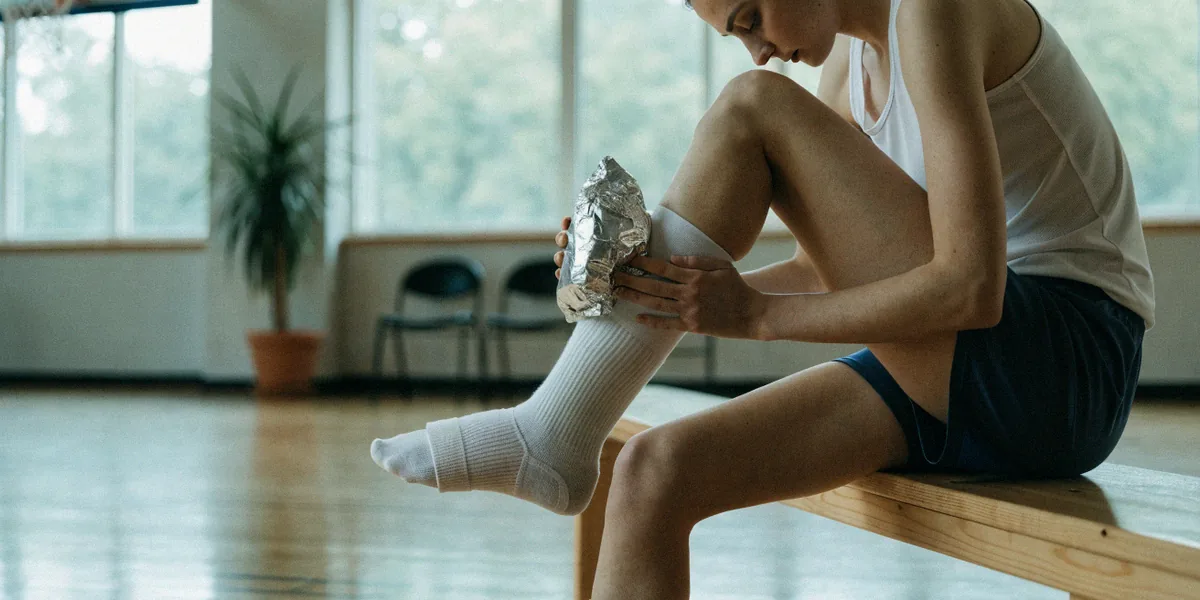
Ankle injuries aren’t just bad luck. They’re the predictable result of how the game is played, how the female body moves, and how fatigue changes landing mechanics in the fourth quarter.
The Numbers Behind the Injury
NCAA injury surveillance data shows ankle sprains are the most common injury in women’s basketball, accounting for a significant share of all game and practice injuries. Lateral ankle sprains — where the foot rolls inward and stretches the lateral ligaments — are by far the most frequent type. The same pattern shows up in Canadian university sport, where U Sports programs report ankle injuries as a leading cause of missed practice time. The mechanism is almost always the same: landing on someone’s foot after a rebound, cutting sharply on a wet floor, or planting awkwardly on a drive.
Why Female Players Face Higher Risk
Research consistently points to a few factors that put female players at greater risk:
- Landing mechanics that place more stress on the lateral ankle during jumps and stops
- Hormonal fluctuations that can affect ligament laxity across the menstrual cycle
- Wider hip-to-knee ratios that change lower-body alignment on cuts and landings
- Fatigue in late-game situations, when proprioception and reaction time drop
- Previous sprains, which are the single biggest predictor of future ones
Once a player has sprained an ankle, her risk of re-injury climbs sharply unless she completes a proper rehab program.
The First 72 Hours: What We Do Right After the Roll
Gone are the days of RICE as the gold standard. We now follow the PEACE & LOVE protocol, which reflects current sports medicine thinking on tissue healing.
PEACE Phase: Protecting the Joint
In the first 24 to 72 hours, the goal is to protect the injured tissue and let the inflammatory process do its job:
- Protection: Limit weight-bearing and avoid movements that reproduce pain for the first day or two.
- Elevation: Keep the ankle above heart level when possible to manage swelling.
- Avoid anti-inflammatories: Skip NSAIDs in the early phase unless a doctor advises otherwise, since inflammation is part of the healing signal.
- Compression: Use an elastic wrap or compression sleeve to control edema.
- Education: Explain to the player what’s happening, what to expect, and what the timeline looks like.
What to Avoid in Early Recovery
We steer players away from aggressive massage, heat, and alcohol in the first 48 hours, all of which can increase swelling. We also avoid the temptation to “test it out” by jogging or shooting before the joint has settled. If pain or swelling isn’t improving within a few days, we refer to a physiotherapist. Sport Physiotherapy Canada maintains a directory of certified sport physiotherapists across the country, which is where we usually start when a player needs hands-on assessment.
Building Back Strength and Stability
Once the acute phase passes, the real work begins. Rehab isn’t just about pain going away — it’s about rebuilding the strength, range of motion, and neuromuscular control the ankle needs to handle game speed.
Range of Motion and Isometric Work
We start with gentle ankle alphabet drills and isometric holds in four directions — dorsiflexion, plantarflexion, inversion, and eversion. Theraband resistance work comes next, with slow controlled reps in each direction. Isometrics let the player load the tissue without joint movement, which is usually well tolerated early on.
Proprioception and Balance Drills
This is where the injury actually gets fixed. After a sprain, the ankle’s position sense is impaired, which is why re-injury rates are so high. We progress through:
- Single-leg balance on a firm surface with eyes open, then closed
- Balance on a foam pad or folded towel
- Wobble board work in all four quadrants
- BOSU trainer single-leg squats and reaches
- Hop-and-stick landings, then lateral hops for distance
We insist on working with a Canadian-certified athletic therapist or physiotherapist through this phase. They can objectively measure strength deficits and clearance milestones that a player can’t assess on her own.
Returning to Shooting and Court Work
Shooting is usually the first on-court activity we reintroduce because it’s low-impact and lets the player stay connected to the game mentally. Canada Basketball’s return-to-play guidelines give us a framework: the player should be pain-free, have full range of motion, and pass strength and balance testing before progressing.
Stationary Shooting Drills
We start with form shooting close to the basket, then free throws, then catch-and-shoot from five spots. No jumping initially — the player shoots flat-footed or off a small toe raise. This phase is more about re-establishing rhythm than about volume.
Movement and Game-Speed Shooting
Once stationary work feels normal, we add curl cuts, fade cuts, and one-dribble pull-ups. Then we build to full-speed closeouts, defensive slides, and rebounding drills. The rule we use: if she can’t do it in a controlled drill without hesitation, she’s not ready for live play.
Preventing the Next Sprain
Prevention is the part most players skip, and it’s the part that matters most. A player who has sprained once is far more likely to sprain again.
Strength and Balance Maintenance
We keep ankle strengthening and balance work in the weekly program year-round, not just during rehab. Calf raises, single-leg Romanian deadlifts, and wobble board work stay in the warm-up rotation. We also use the FIFA 11+ warm-up program, adapted for basketball, which has been shown to reduce lower-limb injury rates when done consistently.
Gear and Taping Strategies
For players with a history of sprains, we lean on either prophylactic bracing or taping during games and hard practices. ASO and McDavid are the two brands we see most in Canadian gyms — both make reliable lace-up braces and ankle supports. Taping requires a certified athletic therapist to apply properly, and it loses effectiveness as the game wears on, so bracing is often the more practical choice for practices.
Lessons from Pro Basketball Overseas
Several Canadian players we follow who compete in Europe and Australia have shared how they handle ankle health across 30-plus game seasons with constant travel.
Managing Recovery on the Road
Long flights, back-to-back games, and unfamiliar courts all raise injury risk. The pros we’ve talked to prioritize compression socks on travel days, ice baths after games, and a strict pre-game ankle routine. Many carry their own wobble board or balance pad in their luggage.
Advice from Canadian Pros
The consistent message from players overseas: communicate with your team’s medical staff early, don’t hide a tweak, and never skip the boring maintenance work. One guard told us she does single-leg balance work while brushing her teeth every morning — small habit, real payoff.
FAQ
How long does an ankle sprain usually take to heal?
Grade 1 sprains typically resolve in one to two weeks, Grade 2 in three to six weeks, and Grade 3 can take several months. Full return to sport depends on passing strength, balance, and sport-specific testing, not just on pain disappearing.
Should I use heat or ice on a fresh ankle sprain?
Ice is fine for short-term pain relief, but current guidance de-emphasizes aggressive icing because it can slow the natural healing response. Avoid heat entirely in the first 48 hours, since it increases swelling.
Do I need an ankle brace every time I play?
Not necessarily. Players with no injury history may not need one. But if you’ve sprained before, bracing with a product like ASO or McDavid during games and hard practices significantly reduces re-injury risk.
Can I shoot while my ankle is still recovering?
Yes, once you’re cleared for partial weight-bearing and pain-free range of motion. Stationary form shooting and free throws are usually the first on-court activities we reintroduce.
Where can I find a qualified physiotherapist in Canada?
Sport Physiotherapy Canada maintains a national directory of certified sport physiotherapists. Canada Basketball also publishes return-to-play guidelines that your clinician can reference when building your progression.
Ankle sprains are frustrating, but they’re also one of the most manageable injuries in women’s basketball when they’re handled properly. The players who come back strongest are the ones who respect the timeline, do the unglamorous balance and strength work, and lean on certified professionals instead of gut feeling. Listen to your body, trust your medical team, and don’t rush the return — the court will still be there when you’re ready.


Post Comment