Three-Point Shooting Drills for Guards: Build Range That Travels
We still remember sitting in a gym in Hamilton watching a Canadian guard hoist up three after three in an empty gym, only to see her rush every release once a defender closed out during a live scrimmage. Her form was fine in drills. Her feet were not. That gap between a pretty practice jumper and a game-ready three is where most Canadian guards get stuck, and it is the exact gap we want to close here. Whether you are chasing an NCAA roster spot or trying to extend a career in pro basketball overseas, the drills below are the ones we come back to again and again because they build range that actually shows up when it counts.
Why Guards Need a Different Three-Point Routine
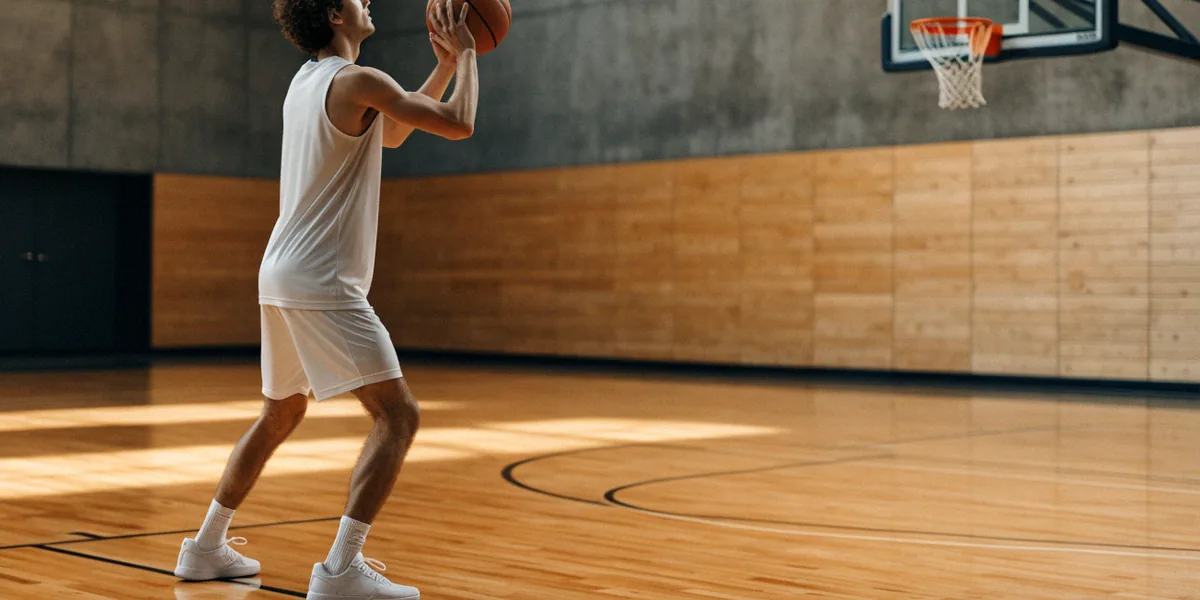
Bigs can survive on a handful of pick-and-pop threes per game. Guards cannot. If you are a one or a two, your three-point shot has to work off movement, off the dribble, and after a couple of hard changes of direction. Watch Kia Nurse and you see a guard whose catch-and-shoot threes come from precise footwork and a lightning release, not from standing still waiting for a kick-out. Watch Jamal Murray and you see a guard who weaponizes off-the-dribble three-point drills to punish defenders who go under screens. Both of those skillsets are built deliberately, not accidentally.
In NCAA women’s basketball, the 30-second shot clock rewards guards who can get into a three quickly, and pro basketball overseas leagues in Spain and Turkey value guards who can shoot off movement coming off staggers, flares, and handoffs. If your three only works in a stationary drill, you are not ready for either level.
Catch-and-Shoot vs. Off-the-Dribble Threes
Catch-and-shoot threes are about preparation before the ball arrives: hands ready, feet set, elbow under the ball. Off-the-dribble threes are about balance and deceleration. They require different footwork patterns, different timing, and different conditioning. We train them separately because they fail for different reasons. A guard who misses catch-and-shoot threes usually has a setup problem. A guard who misses pull-up threes usually has a balance problem.
The Canadian Basketball Factor: Shorter Seasons, Bigger Need for Efficiency
Most Canadian basketball seasons at the club and high school level are shorter than what players face south of the border, and gym time in January can be scarce. That means every rep has to be deliberate. When you cannot play 60 games a year, your shooting drills have to simulate the reads and the speed you will face in the NCAA or overseas. Efficiency in training is not optional up here — it is the whole strategy.
Form and Footwork Drills for a Repeatable Release
Canada Basketball’s youth programs hammer a simple idea: form shooting before range. We agree completely. If your release wanders when you step back to 25 feet, you did not earn the extra distance yet. These two drills fix the most common flaws we see in Canadian guards.
One-Hand Form Shooting (Close Range)
Stand two feet from the rim, ball in one hand, elbow tucked, and shoot with perfect rotation. No guide hand. Ten makes from the right block, ten from the left, ten from the top. The goal is not makes — it is a repeatable release. If the ball comes off your palm or your elbow flares, the shot does not count. This is the drill that builds the foundation every other three-point shot sits on.
Step-In and Hop Footwork for Game Speed
Set up at the top of the key with a partner passing from the wing. On the catch, take one hard step into the shot (step-in) or a short hop into it. Alternate the two footwork patterns every rep. The step-in is faster for closeouts; the hop gives you more rhythm off a hard pass. We like to do 20 of each, then 10 where the passer randomly decides which footwork you use. That randomness is what makes it game-like.
Off-the-Dribble Three-Point Drills for Guards
This is where guards separate themselves. Pro basketball overseas scouts are not just looking at whether you can make a wide-open three. They want to know if you can create one when the offense stalls. These two drills mimic the actions you will see in Spain, Turkey, and Italy.
Two-Dribble Pull-Up Three
Start at half court with a live dribble. Two hard dribbles into a pull-up from three. That is it. No wasted motion, no extra bounce, no drifting. The NCAA 30-second shot clock means you often have to shoot a three with only a couple of dribbles of setup, so this drill should feel uncomfortable at first. Do 10 reps going right, 10 going left, then 10 alternating based on a coach’s call.
Side-Step Three Off a Live Dribble
Attack the elbow, then use a hard side-step to create space and rise into a three. This is the shot Jamal Murray has made a career out of, and it is the exact action that translates to pro basketball overseas because it works against closeouts and switches. We like to do this drill with a defender who is allowed to contest but not foul. Ten reps each direction, tracking makes and misses.
- Two-dribble pull-up: 30 reps total, alternating sides
- Side-step three: 20 reps with a live contest
- Combine both into a 3-minute continuous shooting block
Conditioning and Game-Situation Shooting Drills
Fresh legs make everyone look like a shooter. Tired legs tell the truth. Canadian basketball training camps often build conditioning into shooting work because the season itself is a sprint, and we think every guard should do the same.
The 17s Drill: Fatigue Shooting
Seventeen shots in two minutes. Five catch-and-shoot threes, five off two dribbles, five side-step threes, and two free throws. Track your makes. The goal is not just volume — it is holding your form when your heart rate is redlining. Do this twice a week and your fourth-quarter shooting percentage will start to look a lot more like your first-quarter number.
Transition Three-Point Drills
Sprint from half court to the wing, catch a pass, and shoot a three. Then sprint back and do it on the other side. Ten reps total. This mimics the trailing three and the kick-ahead three that decide games in the NCAA and overseas. If you cannot make these at speed, you are leaving points on the floor every single game.
How to Track Progress and Avoid Burnout
Shooting is a skill that rewards consistency, but it also punishes overtraining. Canadian guards often train alone in winter, which means nobody is telling you to back off. We build accountability into our own routines so we do not have to rely on a coach being in the gym.
Shot Charts and Make Percentages
Keep a shooting journal. Every session, log your makes, attempts, and where the shots came from. Apps like HomeCourt and Noah Basketball can do this automatically and give you real data instead of a vague feeling. If your left-wing three is 20 percent worse than your right, that is your next project.
Recovery and Volume Management
Cap your high-volume shooting days at three per week. On off days, do form shooting only, and keep it under 100 makes. Sleep, hydration, and shoulder care matter more than most young guards realize. The goal is to be shooting in March, not to be shooting in October and hurt by December.
FAQ
How many three-point shots should a guard take per day?
For most guards, 200 to 400 quality reps per session, three to four times per week, is plenty. The quality matters more than the number. If your form breaks down at rep 150, stop and reset.
What is the best age to start training off-the-dribble threes?
We like to see guards master one-hand form shooting and catch-and-shoot threes first, usually around 13 or 14. Off-the-dribble work can start once the base form is repeatable under fatigue.
Do Canadian guards need different drills than American guards?
Not different drills, but different emphasis. Shorter seasons and less gym access mean Canadian basketball players need every rep to be game-like. Efficiency in training is the biggest separator.
How do I know if my three-point shot is ready for the NCAA or pro basketball overseas?
If you can shoot 38 percent or better on catch-and-shoot threes and 33 percent or better on off-the-dribble threes in live drills with a contest, you are in the range scouts want to see. Track it honestly.
Consistent, game-like three-point shooting drills for guards are the fastest path from a Canadian basketball gym to an NCAA roster or a pro basketball overseas contract. Build the form first, add the footwork, then stress-test it with conditioning and live contests. Do that for a full off-season and your range will not just look good in an empty gym — it will travel with you.


Post Comment